

The Logan-Todd Regional Water Commission was the sponsor to a project at Austin Peay State University to find a safeguard to local water supplies, and that investment has paid off.
According to a news release, a team of APSU engineering physics students have developed a low-cost, promising monitoring systems that would be used to inspect a critical water pipeline that serves 13 Kentucky and Tennessee communities. And it would allow them to not shut off the water supply.
Students Casey Holly, Lily Skau and Eric Rose developed an acoustic monitoring system using accelerometers to detect sediment building within a 36-inch diameter pipeline. The system would cost roughly $6,000, significantly cheaper than current inspection devices. The students’ solution works by listening to the pipe’s acoustic “signature” through an accelerometer attached to its exterior. A controlled impact device strikes the pipe at the same location with consistent force, while the accelerometer records the acoustic response. Software converts the raw data using Fast Fourier Transform (FFT) analysis to identify the pipe’s resonant frequency.
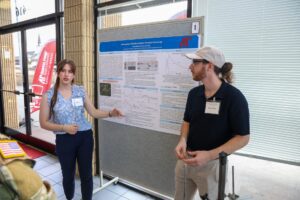
The students’ project, sponsored by the Logan Todd Regional Water Commission, aims to prevent service disruptions that would leave thousands of residents without clean water. Their work earned them the top prize at the College of STEM’s annual Innovation Experience and could benefit several communities, including Springfield, Tennessee and Guthrie and Russellville in Kentucky.